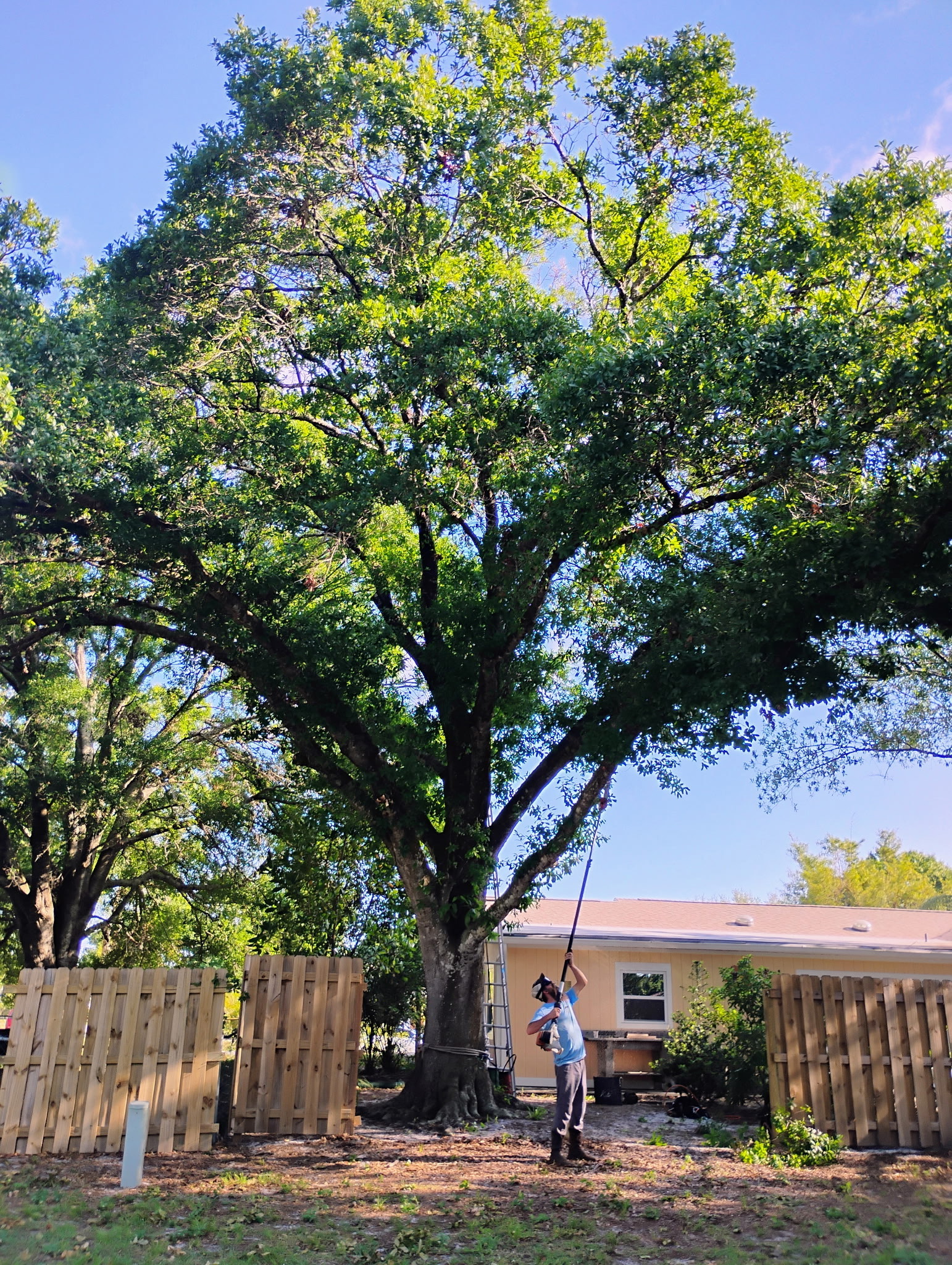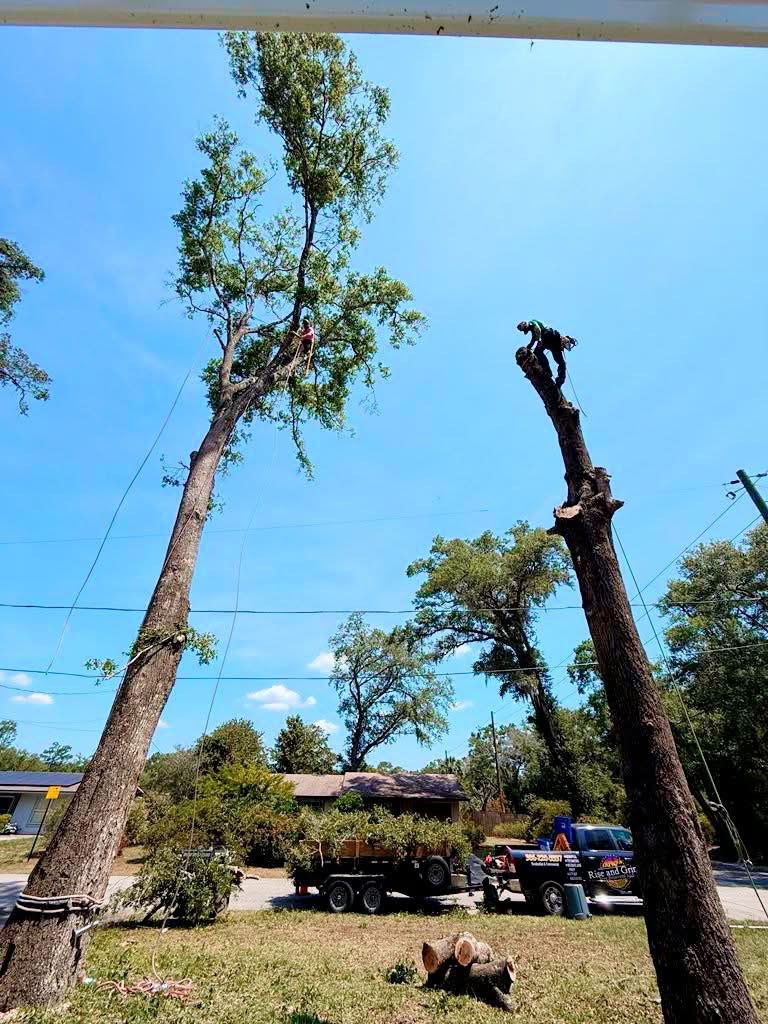
Trees and power lines often share the same space, especially in residential neighborhoods. Proper tree trimming near power lines is essential for maintaining public safety, preventing outages, and reducing the risk of property damage.
Because of the dangers involved, this type of trimming requires a higher level of planning and expertise than standard tree maintenance.
The Risks of Trees Growing Near Power Lines
When branches extend into or over power lines, they create several potential hazards. Even small limbs can cause serious issues if they come into contact with live electrical lines.
Common risks include:
- Power outages during storms or high winds
- Electrical fires caused by branch contact
- Downed lines resulting from falling limbs
- Increased risk to pedestrians, drivers, and nearby structures
Regular tree trimming near power lines helps reduce these risks before they turn into emergencies.
How Trees Interact With Power Lines Over Time
Trees grow continuously, and in warm climates, growth can accelerate quickly. What starts as a safe clearance can disappear within a single growing season.
Without ongoing maintenance, branches may begin rubbing against lines or sagging into them. Tree trimming near power lines focuses on maintaining proper clearance while allowing trees to grow in a controlled, stable direction.
Warning Signs Trimming Is Needed
Property owners should pay attention to early indicators that trimming may be necessary. Some common signs include:
- Branches touching or hanging over power lines
- Trees leaning toward electrical lines
- Limbs swaying into lines during wind
- Visible scorch marks or damaged branches
Addressing these signs early can help prevent outages and safety hazards.
Why This Type of Trimming Is Not a DIY Project
Tree trimming near power lines is especially dangerous without proper training and equipment. Electrical lines may not always appear live, but contact can still cause severe injury or worse.
Professionals handling this type of work understand safe approach distances, proper cutting techniques, and how to control falling limbs around energized lines.
Coordination and Safety Considerations
In some cases, trimming near power lines requires coordination with local utility providers. Trained crews plan each cut carefully to avoid contact and ensure branches fall away from lines, homes, and roadways.
Safety measures often include:
- Controlled sectional cutting
- Use of insulated tools and equipment
- Clear communication between crew members
- Proper traffic and area control
These precautions are essential when working near electrical infrastructure.
Preventative Maintenance and Planning
Routine inspections help identify potential conflicts between trees and power lines before they become urgent. Preventative tree trimming near power lines is often safer and more cost-effective than emergency trimming after a storm or outage.
Planning ahead also reduces the likelihood of sudden service disruptions during severe weather.
Final Thoughts on Tree Trimming Near Power Lines
Trees and power lines can coexist safely with proper planning and regular maintenance. Understanding the risks and importance of tree trimming near power lines helps property owners make informed decisions and prioritize safety.
Taking a proactive approach protects not only individual properties, but also surrounding neighborhoods and essential infrastructure.